Uncle Hew had an accident around 40 years ago. One leg came out of it noticeably shorter than the other, and the most straightforward fix available to him at the time was to build up one side of his shoe.
For four decades, that was what he relied on. The added height balanced the difference, but the shoe grew thick, heavy, and awkward to walk in. Eventually he got used to it, because as far as he knew, it was the only option.
Until he came to us.
Uncle Hew wore a built-up shoe for 40 years to manage a leg length difference. A full assessment found part of that correction could sit inside a custom insole instead, sized to how his body actually moves, not just the measurement on paper.
”Is there another way?”
When we first saw Uncle Hew, we didn’t start by deciding how much height to add. We wanted to understand how his body had adapted over the years.
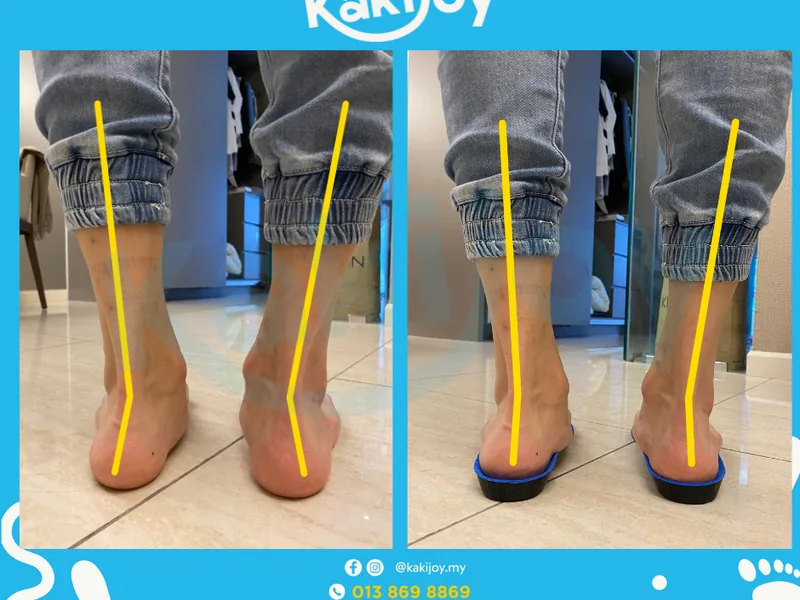
A leg length difference isn’t only about measuring one leg against the other. We also look at how someone stands, walks, positions their feet inside their shoes, and how the rest of the body has compensated. For Uncle Hew, that mattered more than usual: his body had been moving this way for decades, and any change had to work for him in real life, not just look correct on paper.
What is a leg length difference?
A leg length difference means there’s a measurable difference between the two lower limbs. It generally falls into one of two categories.
Structural leg length difference
The actual bone length is different between the two legs. This is often the result of fractures, major injuries, surgery, or a growth plate injury earlier in life.
Functional leg length difference
The bone lengths are close, but the legs still function unevenly. Pelvic position, joint movement, muscle tightness, and overall body alignment can all change the way the legs work, so someone can appear to have one leg shorter even when the bones themselves say otherwise.
That’s why “this side is shorter, so let’s raise it” doesn’t always tell the full story, and it doesn’t mean the entire difference should be corrected immediately. This mattered for Uncle Hew, whose body had adapted to the difference for decades. The right amount of correction depends on the person: their symptoms, their walking pattern, their history, how their body actually responds, not just the measurement on paper.
Can the lift be placed inside the shoe?
For many years, Uncle Hew’s correction was built onto the outside of his shoe, which made the footwear heavier and bulkier than it needed to be.
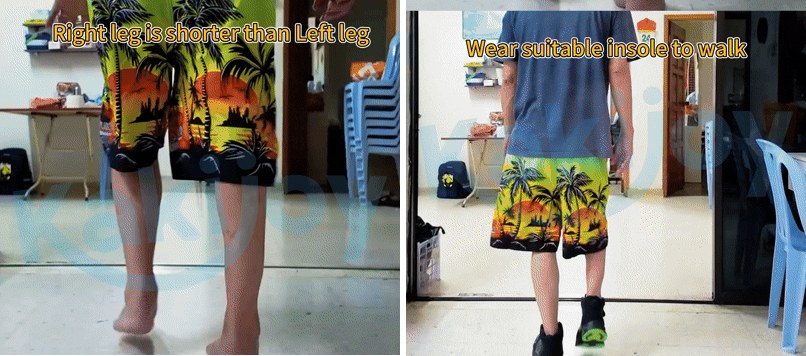
During his assessment, we explained that depending on how much correction is needed, part of the height can sometimes sit inside the shoe instead, through a custom insole or internal lift. For Uncle Hew, that was new. He hadn’t realised part of the correction could be managed inside his own footwear.
Not every case works this way. If the difference is large enough, there may not be enough room inside the shoe, and external modification is still the right call.
The real question was never “which method wins.” It’s “which combination fits this particular person.”
What we considered during Uncle Hew’s assessment
With Uncle Hew, we looked at more than the measurement itself. His standing posture. Foot and heel alignment. Walking pattern. How his body compensated from one side to the other. What he wore day to day, and where it hurt or felt off.
For someone who’s lived with this for 40 years, the fix has to survive contact with real life. A correction can look perfect on a chart and still fail if the shoe ends up too heavy or too uncomfortable to actually wear.
What changed for Uncle Hew
For decades, Uncle Hew’s understanding had been simple: shorter leg, thicker shoe. That was the only option he’d ever known.
The assessment changed that. He learned that managing a leg length difference isn’t just about the insole. It’s about foot position, walking pattern, footwear, comfort, and how much correction his body could realistically handle. Part of his correction now sits inside a custom insole instead of stacked onto the outside of his shoe, managed the way his case actually needs it, not the way a single number on a chart would suggest.
Sometimes the biggest difference isn’t adding more height. It’s finding a better way to manage what’s already there.

Uncle Hew’s old solution wasn’t wrong. It was simply the option he’d known for many years, and today’s assessment methods and orthotic design just give us more ways to look at the same problem. After 40 years, that was the discovery for him: there may be another way.
Key takeaways from this case
- A leg length difference is more than a number. Posture, gait, and how the body has compensated over time all shape the right correction, not the measurement alone.
- Full correction isn’t always the goal. For someone whose body has adapted over decades, comfort and practicality matter more than making both legs measure identically.
- The lift doesn’t have to live outside the shoe. Depending on the case, part of the correction can sit inside a custom insole instead of being built onto the outside.
- The right answer depends on the person, not the method. The question isn’t which technique is “better.” It’s which combination fits how someone actually lives and walks.
Frequently asked questions
Does a leg length difference always need to be fully corrected?
Not necessarily. A measurable difference doesn’t automatically mean the entire amount needs correcting right away, especially for someone whose body has adapted to it over years. The right amount depends on symptoms, walking pattern, and how the body responds, not the measurement alone.
Can a leg length correction go inside the shoe?
Often, yes, through a custom insole or internal lift, depending on how much correction is needed. If the difference is large enough that there isn’t room inside the shoe, external modification may still be the right call.
Can it be reassessed after years of wearing a built-up shoe?
Yes. The body’s adaptation over time is exactly what a proper assessment accounts for. It’s part of what determines the right amount and placement of correction, not a reason to rule out change.